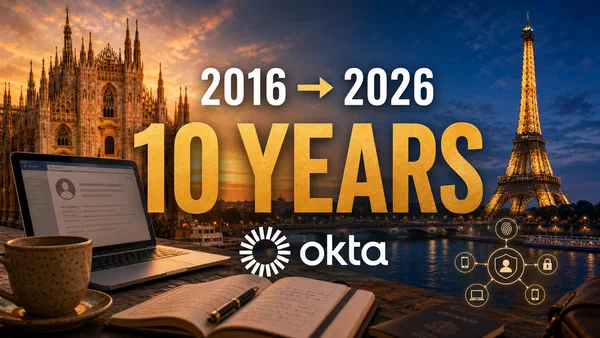

My first tenant #
Some dates do not seem important while they are happening.
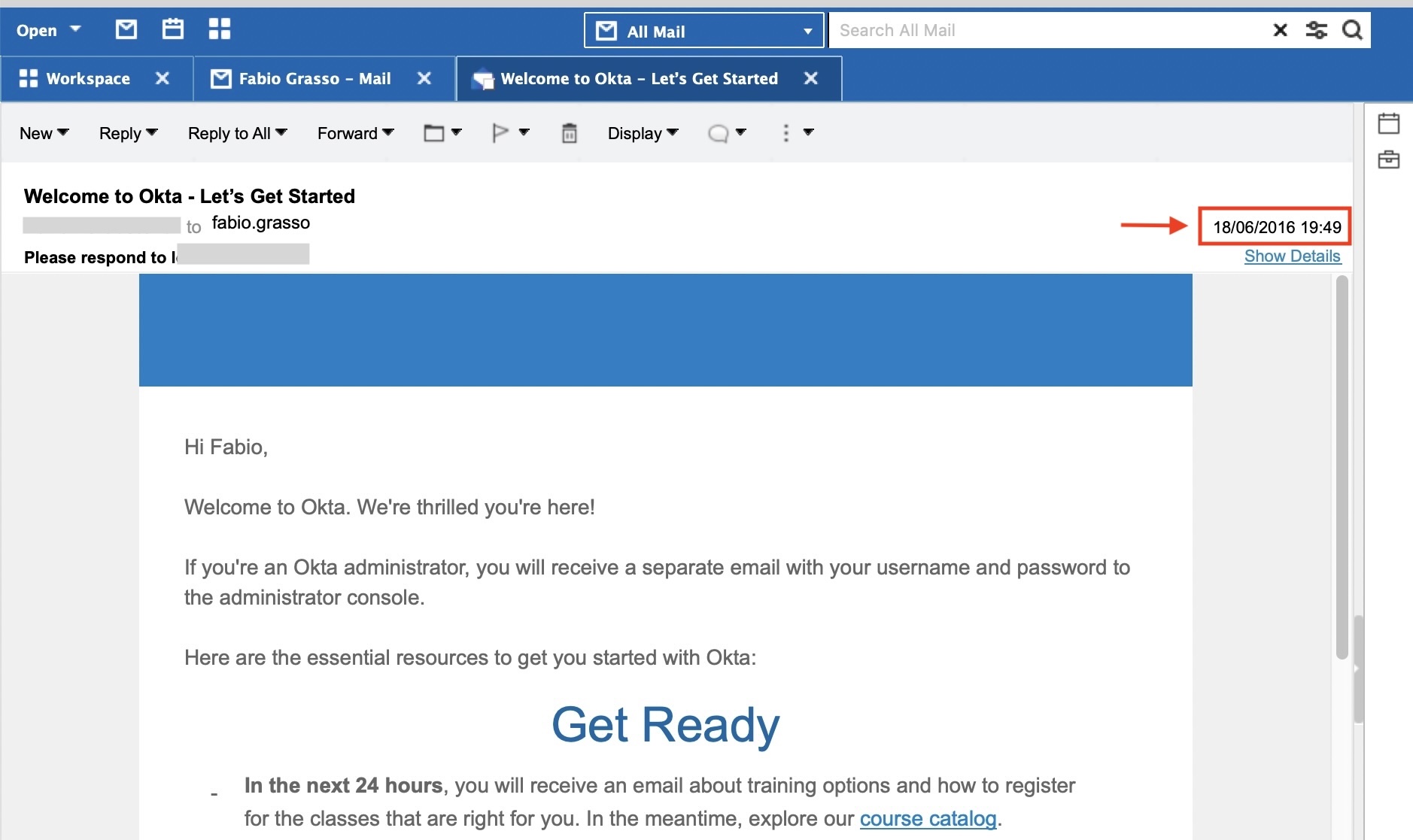
On June 18, 2016, I received my first email from an Okta tenant.
At the time, it was just a new environment to try. Ten years later, that email has become a small personal artifact: the starting point of a journey I had not planned, but one that profoundly changed my work.
My real Oktaversary as an Okta employee falls on June 9: a few days ago I reached four years as an Oktanaut. June 18, however, is a different, longer anniversary. It marks ten years since I first got hands-on with Okta, ten years since I started working on a platform that, from a technical experiment, would become a huge part of my professional identity.
The Factor-y bet #
At the time, I was working as a systems engineer at Factor-y. My manager, and the company’s CEO, Daniele, suggested that I take a look at this interesting new product.
He is one of those genuinely brilliant people, with that ability to spot signals before others do. He also has, as often happens with people like that, a tendency to jump headfirst into whatever is new at the moment. Sometimes that means shifting energy away from day-to-day work, toward projects that do not always deliver immediate results.
So yes, my first reaction was more or less: “Here we go, another thing - possibly useless - to do R&D on, while I already have a thousand other things to do.”
With hindsight, that was one of the most forward-looking choices he made for his company and, indirectly, for me too. From the very first tests, I realized Okta had something different. It was not just another SSO tool. It was a different way of thinking about Identity: cloud-based, integrated, quick to set up, oriented toward SaaS applications, but with a much broader vision.
In Italy, we were among the first to work with Okta and to bring customers a SaaS vision of Identity and Access Management. After implementing it internally, the first “real” project arrived in 2017. That story has a special meaning for me: that customer is still with Okta today and, in a few months, will reach ten years on the platform. In a technology world where everything seems to change quickly, ten years of continuity says a lot.
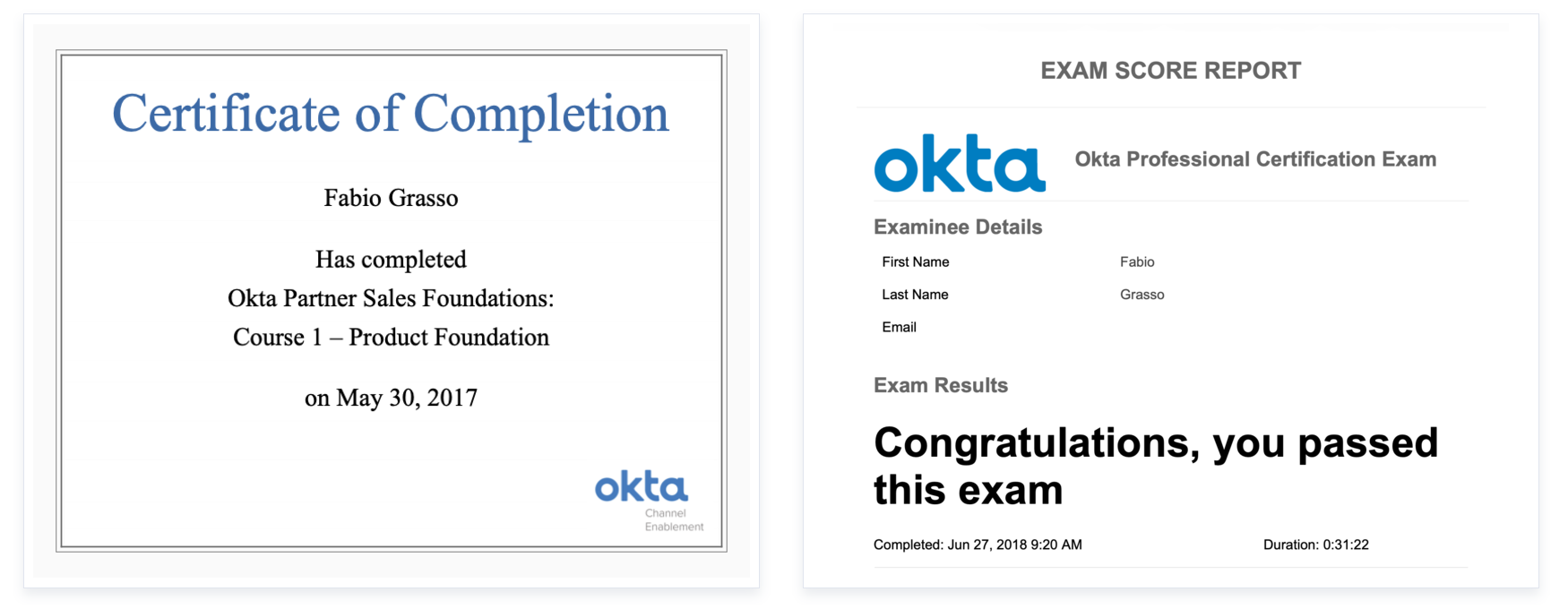
In those years, Okta progressively took up more and more space in my work. First a few internal tests, then a few demos, then the first projects, then more and more customers. At some point, it was no longer just a part of my job: it was my job.
I also started working on presales, internal training, and architecture. And the more my experience grew, the more my passion grew for this technology and for everything it represented.
The jump to Okta #
When, in early 2022, I saw Okta’s job posting for a Solutions Engineer who spoke Italian, I understood that maybe the time had come to make the big jump. After years as a partner and consultant, it meant moving to the “vendor side”. I still do not know whether it was the dark side or the light side of the Force, but it certainly changed the perspective completely.
I owe a lot of that to Vitaliy, my manager at the time. He believed in me from the early days and helped me through the transition from consultant to presales. It may sound like a natural step, but it is not. The rhythm changes, the language changes, how you listen to customers changes, and how you build trust changes. Technical experience also takes on a different role: it is not only there to implement a solution, but to help imagine it, explain it, position it, and make it concrete.
France, Paris, and the people #
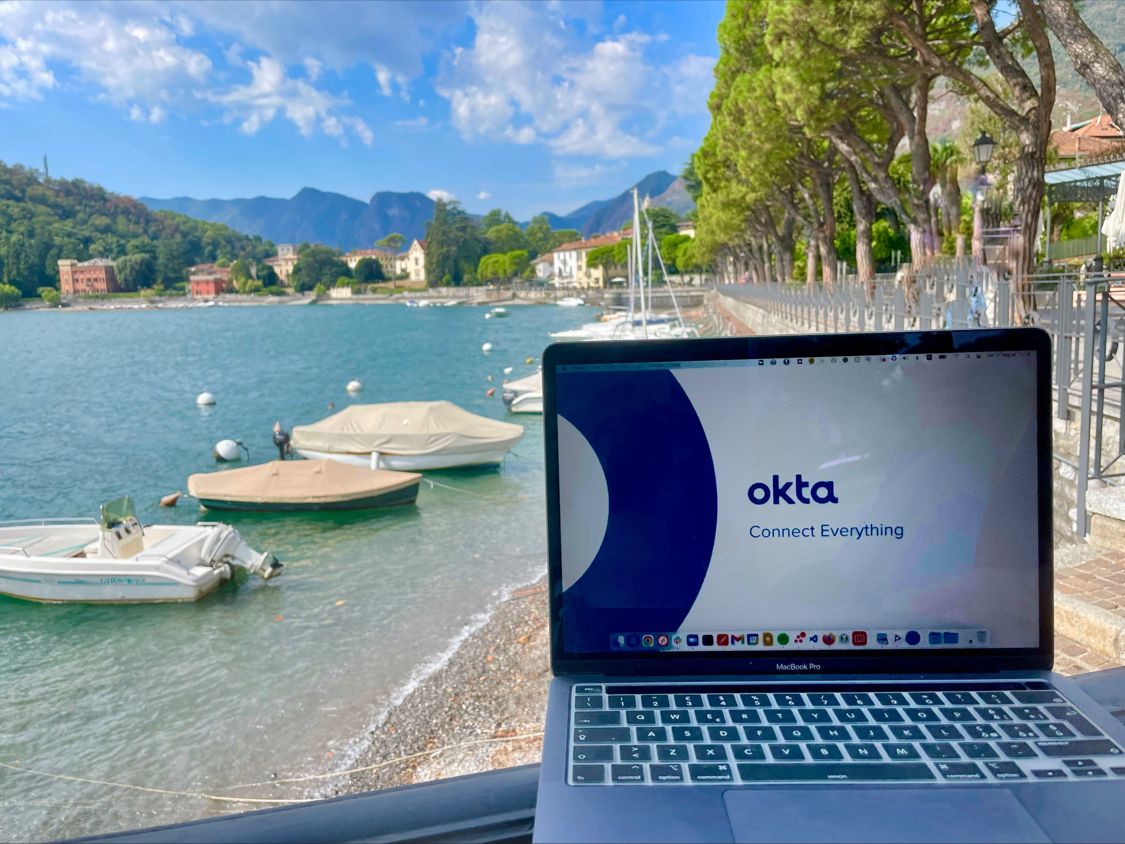
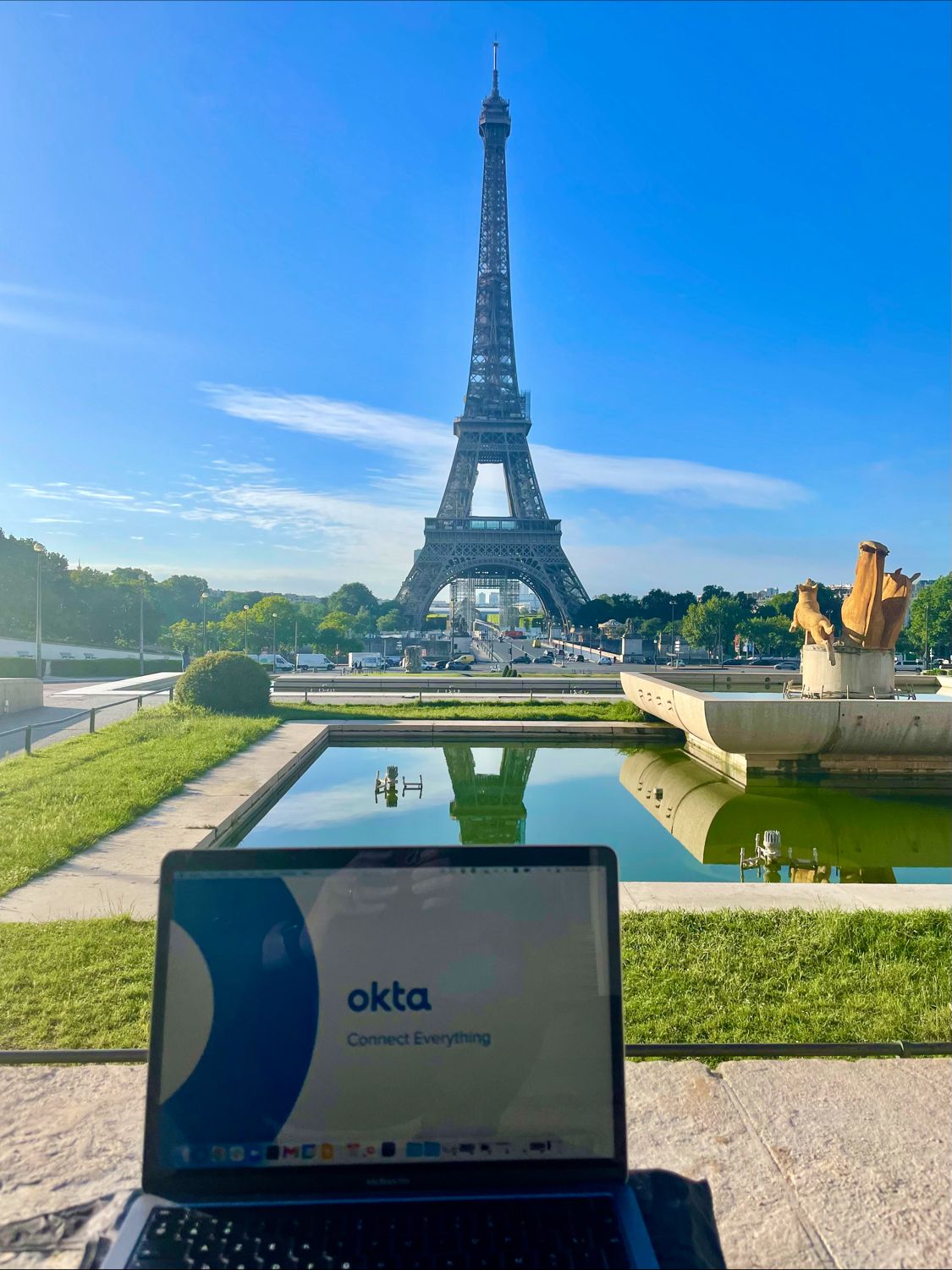
In 2022, Okta did not yet have the structured Italian presence that would arrive in the following years. Moving to the vendor side also meant changing where I lived. For several personal reasons, choosing France and the Paris region felt almost natural. Four years later, I can say it was not only a professional step, but a life choice that led me to settle here. (Maybe that part of the story deserves its own post one day.)
From day one at Okta, I felt at home. Between the last traces of the Covid period and an ongoing move, I did most of my onboarding remotely, but I met special people right away.
People like Thévie, who welcomed me on my first day with real warmth and helped me find my bearings, Despina, with whom I shared mutual support during and after onboarding, Mustapha, who was the best “buddy” ever, and Ivan, who instantly earned his place in the “Mediterranean brotherhood”.
Then Ernesto and Piero, with whom I shared many “romantic” dinners while traveling around Italy when we were the only ones representing the territory, Roberta, who was among the first to encouraged me to apply to work at Okta, Alessio, who for a few months now has been sharing presales support for Italy with me, Hermano, the ever-present smile in the office.
And, of course, Pascale, who, if there were a dictionary entry for “work bestie”, would probably have her name next to it.
To anyone I have not mentioned here, please do not hold it against me: there are, of course, many other people who have mattered in my journey, but including them all would mean listing a good part of Okta’s EMEA organization.
And that is exactly the point: over these years, I have met colleagues who became more than just colleagues.
People with whom I shared projects, challenges, complicated meetings, business trips, laughs, beers and spritzes, good moments, and moments when you simply needed someone to vent to.
I would not be here without them, and I could not imagine a professional journey without people like these.
A platform in motion #
While I was changing role, country, and perspective, the platform my work revolved around continued to transform as well.
In 2016, Okta was mainly SSO, MFA, cloud directory, and SaaS integrations. Even then, it was a very strong and innovative proposition, but over the years the scope expanded enormously. What has always struck me, watching this evolution up close, is the continuity of the rhythm: not a single great transformation, but a constant sequence of releases, improvements, and new product areas.
This continuity does not happen by chance. Okta has consistently chosen to dedicate an important share of revenue to research and development. In FY2026 alone, it reported 639 million dollars in R&D investments (equal to 22% of revenue).1
Beyond the number, it says something important about what this company values: Identity changes continuously, and staying relevant means continuing to invest. New risks, new applications, new work models, new digital experiences, new non-human identities. Each time, the boundary moves a little further.
Over these ten years, I have seen Okta move from a platform centered on access to a much broader ecosystem. Authentication grew richer with risk, context, and signals such as Adaptive MFA2, ThreatInsight3, and FastPass4. The connection between cloud and the legacy world became stronger with Okta Access Gateway (OAG)5, while infrastructure access evolved from Advanced Server Access (ASA)6 to Okta Privileged Access (OPA)7.
Then the boundaries expanded again: Okta Identity Engine (OIE)8 changed the way we think about authentication, journeys, and policies; Okta Workflows9 brought automation for identity processes to a completely new level; Okta Identity Governance10 added access requests, certification, and reporting; Auth011 opened the perspective even further toward CIAM and developer-first experiences. More recently, Identity Security Posture Management (ISPM)12, Identity Threat Protection (ITP)13, and initiatives like Okta for AI Agents14 show how much the conversation is also shifting toward proactive controls, AI agents, and non-human identities.
This evolution also says a lot about how our profession has changed. Identity was never just login, but today that is even more evident: it is security, user experience, automation, governance, compliance, trust. It is the fabric that allows people, applications, systems, and increasingly software agents to work together securely.
That is why we talk about “Identity Fabric”: a connective tissue that extends into every part of the organization, intertwines with every application, adapts to every context, and evolves with every new challenge.
What remains after ten years #
Looking back, three things stand out to me.
The first is that intuition matters. That suggestion to try a new product, which at first I had interpreted as yet another technological distraction, opened a much bigger path than I could have imagined.
The second is that customers build trust over time. The first project from 2017, still alive today, is worth more than many commercial slides: it proves that a good technology choice, when accompanied well, can last and keep generating value over time.
The third is that people really make the difference. Products, roadmaps, and architectures matter, but no professional journey is built alone. I would not be here without the people I have met, the colleagues I have worked with, the managers who believed in me, and the customers and partners with whom I have shared challenges and successes.
Ten years later, that email reminds me that careers, like platforms, are built one project, one person, and one choice at a time.
I am proud and happy to be part of Okta, to support customers in their identity projects, and to keep learning every day from exceptional colleagues.
The next chapter will bring new challenges, including those linked to AI. Honestly, it still feels like I am at the beginning of something.
Just with a few more projects, a few moves, a few customers, many special colleagues, and quite a few more spritzes along the way.
Has there also been, for you, a beginning, a choice, or a person that changed your professional path over time? If you feel like sharing, leave a comment here or on LinkedIn: I would love to read your story.