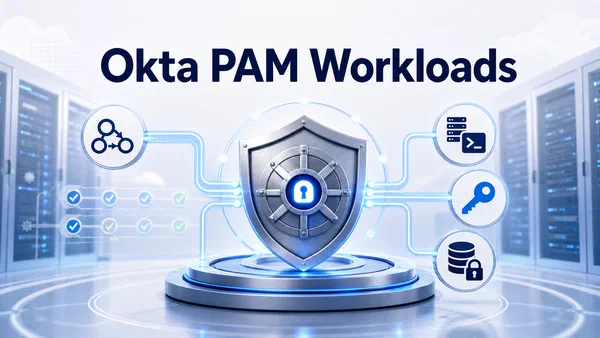
Okta Privileged Access Workloads lets CI/CD pipelines, infrastructure automation, cloud workloads, scripts, and AI agents authenticate using platform-signed OIDC tokens or managed API keys. This article explains workload connections, roles, policies, Principal SSH access, and secret retrieval, with a GitHub Actions lab demonstrating both SSH and secret reveal. It also covers static JWKS support for JWT workload connections.
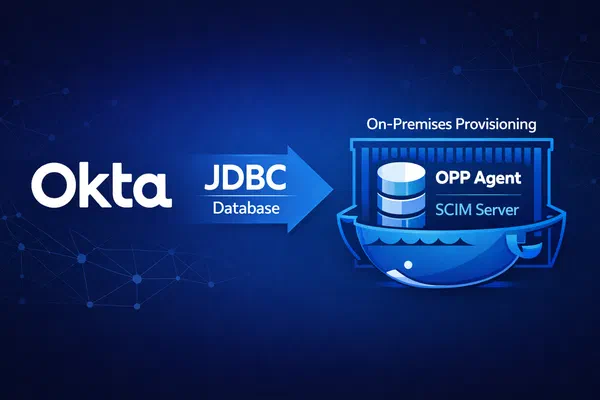
Comprehensive guide to deploying Okta’s new consolidated On-Prem SCIM Agent and Generic Database Connector using Docker Compose. Covers architecture, setup, configuration, stored procedures, entitlement management, and testing workflows for bridging Okta with on-premises databases.
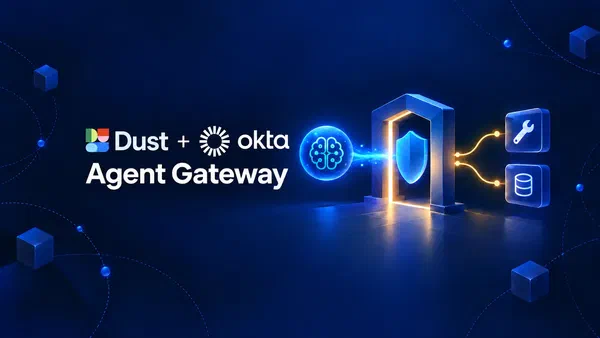
Following my Blueprint Alliance article, this guide turns the role of an Agent Gateway into a concrete configuration example. Connect Dust to MCP servers through Okta, configure user access and Static OAuth, select the tools to expose, and trace requests back to both the agent and its user.
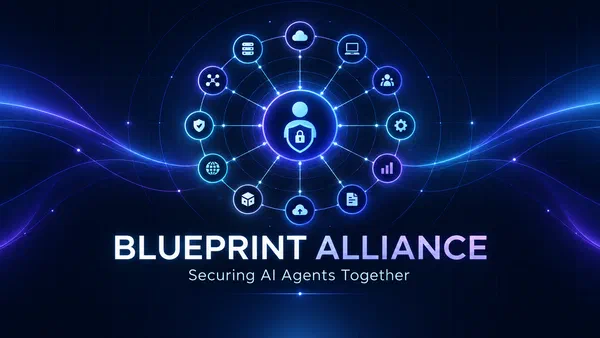
Okta’s original agentic enterprise blueprint has grown into the Blueprint Alliance, bringing identity, cloud, AI, data, application and security vendors around a shared reference architecture. Here is what changed, how its four questions shape agent governance, and what architects should test before adopting the model.
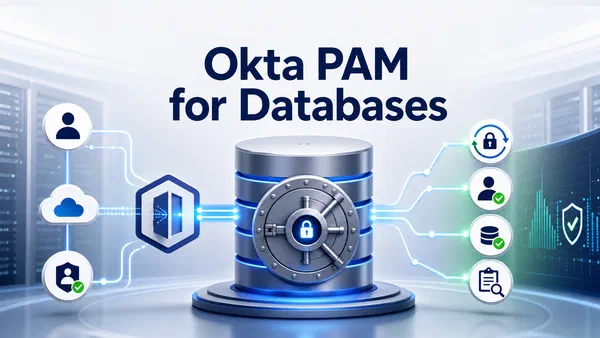
How Okta Privileged Access database integrations discover privileged database accounts, vault and rotate their credentials, and expose checkout through policies with MFA or approvals. The guide explains the Early Access architecture, required gateway role, account rules, and a ready-to-run Docker lab with MySQL, DBGate, and an Infrastructure Orchestrator gateway.
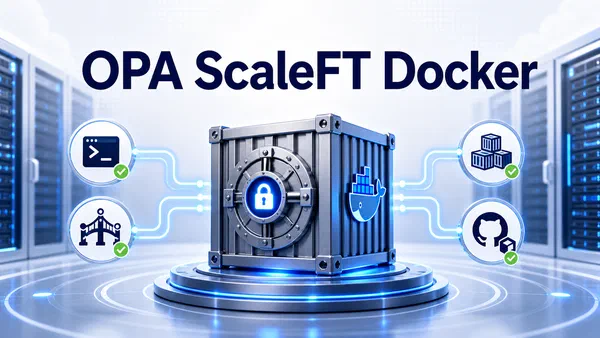
I published a small set of community Docker images for Okta Privileged Access ScaleFT packages: one with the sft client for automation and CI/CD jobs, and one with the gateway package for lab experiments. They are built from Debian slim, tagged with the package version, and published on GitHub Container Registry.
On June 18, 2016, I received my first email from an Okta tenant. Ten years later, after Factor-y, the first projects in Italy, the move to France, and the evolution of the platform, I wanted to pause for a moment and reflect on what it has meant to grow with this technology and with the people who made it special.
When using Okta Identity Engine (OIE), the Sign-In Widget shows an authenticator selection screen that requires the user to manually pick Email or SMS before proceeding. If your policy only allows one method, this extra click adds friction with no benefit. Here’s how to skip it entirely with a small JavaScript customization in the Sign-In Widget.
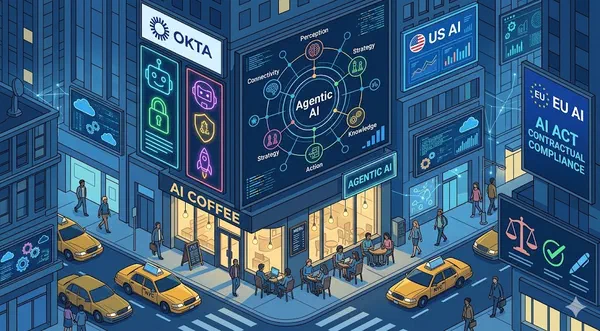
Back from a week in New York, I share how AI is now everywhere: from Times Square billboards to subways, from cafés to the laptops of students and professionals. A journey through advertising, real-world use, and governance risks in the era of AI agents.
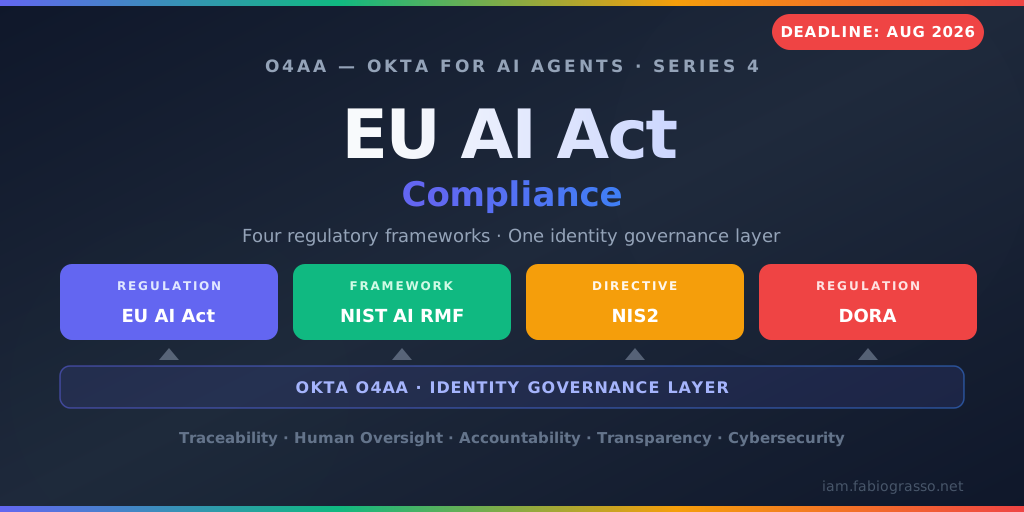
EU AI Act, NIST AI RMF, NIS2, DORA: four regulatory frameworks, one identity layer. How Okta’s O4AA blueprint maps to every compliance requirement before the August 2026 deadline.