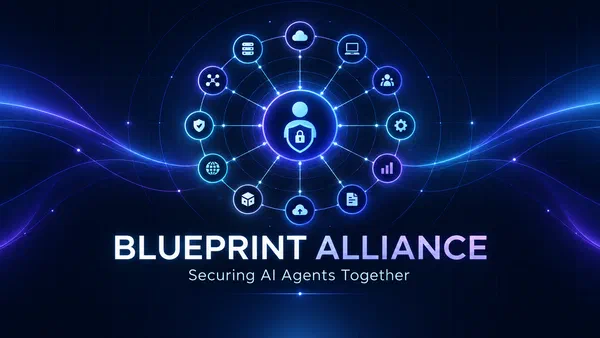
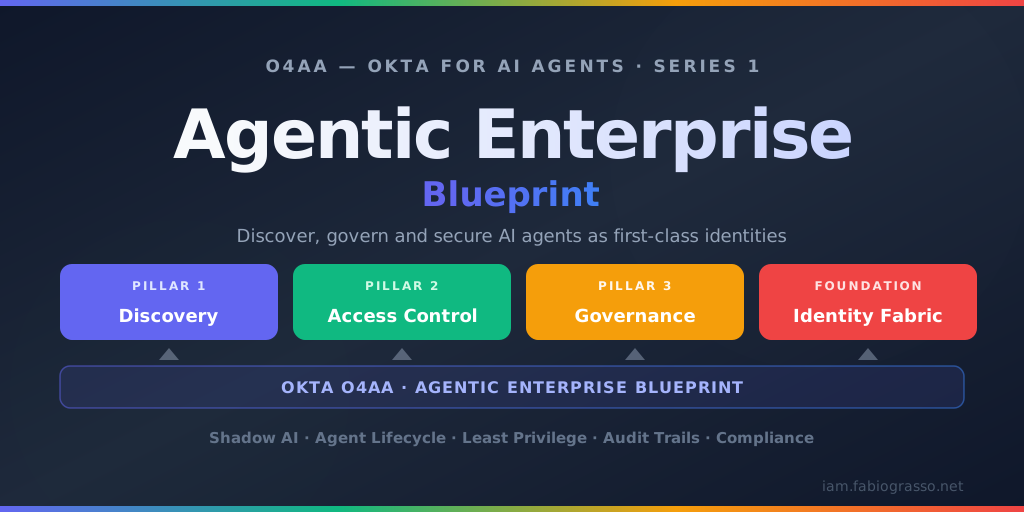
Okta’s original agentic enterprise blueprint has grown into the Blueprint Alliance, bringing identity, cloud, AI, data, application and security vendors around a shared reference architecture. Here is what changed, how its four questions shape agent governance, and what architects should test before adopting the model.
A critical but not anti-AI reflection on costs, productivity, layoffs and human work in 2026. AI is real and useful, but the promise of replacing a team with a cheap monthly subscription is running into economic, technical and organizational limits.
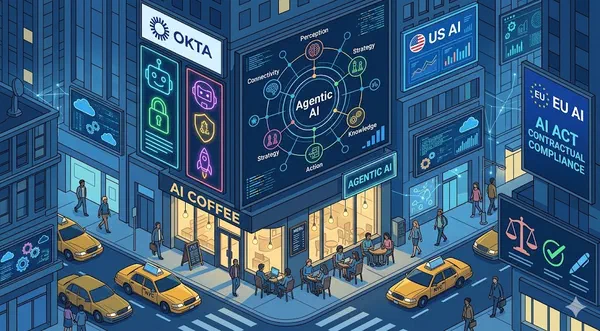
Back from a week in New York, I share how AI is now everywhere: from Times Square billboards to subways, from cafés to the laptops of students and professionals. A journey through advertising, real-world use, and governance risks in the era of AI agents.
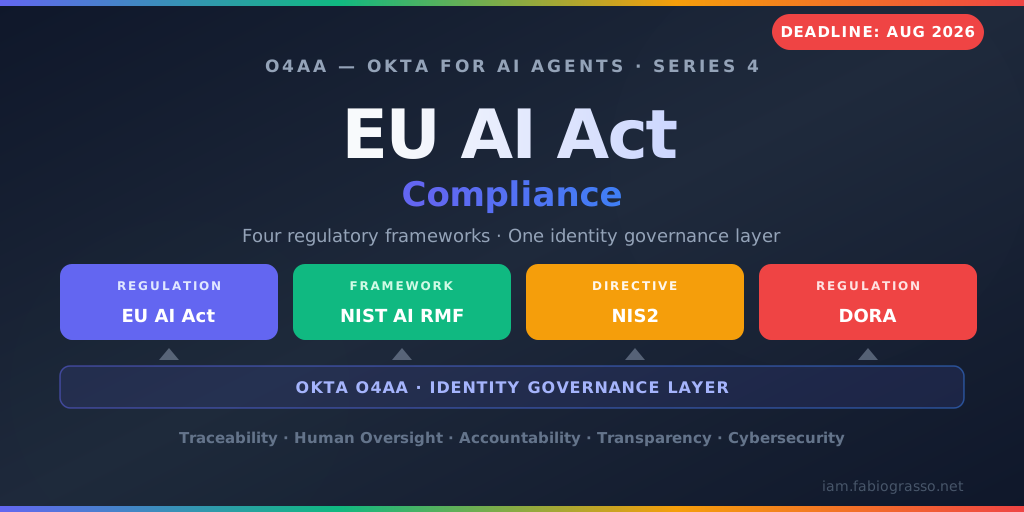
EU AI Act, NIST AI RMF, NIS2, DORA: four regulatory frameworks, one identity layer. How Okta’s O4AA blueprint maps to every compliance requirement before the August 2026 deadline.
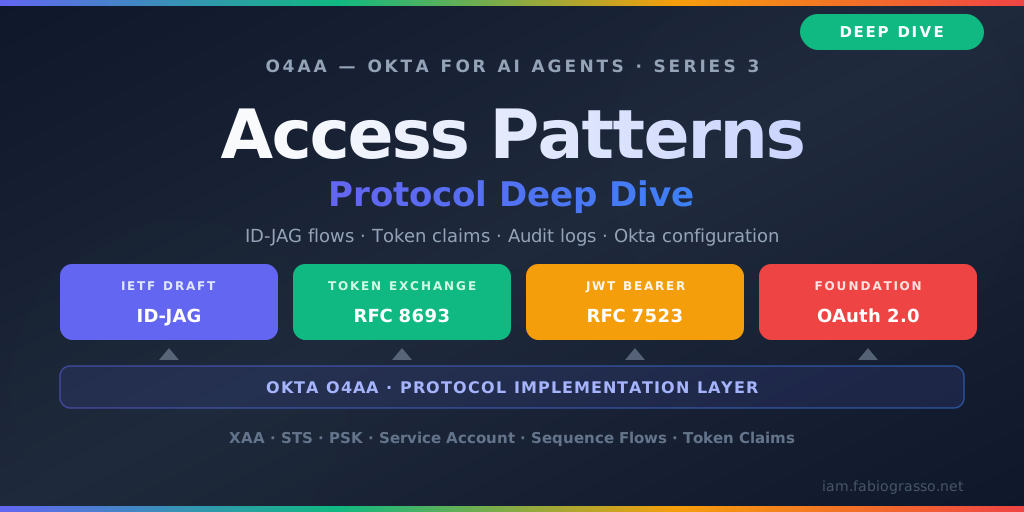
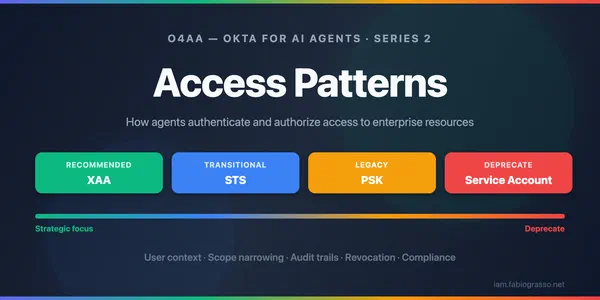
Protocol-level deep dive into the four Okta for AI Agents access patterns: ID-JAG token structure, sequence diagrams, audit log examples, and step-by-step Okta configuration for XAA, STS, PSK, and Service Account.
A strategic overview of the four access patterns for AI agent integrations — XAA, STS, PSK, Service Account — with a comparison matrix, decision framework, and migration roadmap. Companion deep dive covers protocol details and Okta configuration.
Okta’s Showcase 2026 unveils the Agentic Enterprise Blueprint: a comprehensive framework to discover, govern, and secure AI agents as first-class identities, addressing the emerging shadow AI crisis and regulatory compliance requirements.
Who will guard the guards themselves? A critical analysis of vendor lock-in risks in IAM and the advantages of an agnostic approach based on Identity Fabric and open standards.
Analysis of 2024 banking cyber incidents (+45%) according to Banca d’Italia report and the Identity Fabric strategy for operational resilience in the Italian and European financial sector.
Technical analysis of the innovations introduced by NIST SP 800-63-4: from the end of forced password expiration to the emphasis on phishing-resistant authentication, with practical parallels on Okta products.